


Some phrases just sound cooler in Spanish. I don’t know if it’s the flow, the emotion, or the way the words almost dance when you say them out loud, but “Encuentra El Ritmo” is definitely one of those phrases.
If you’ve heard it in a song, seen it on social media, spotted it in a dance class ad, or maybe even found it on a motivational poster somewhere online, you’ve probably wondered:
What does “Encuentra El Ritmo” mean in English?
The direct English translation is:
“Find the rhythm.”
Simple, right?
But honestly, the phrase feels bigger than just a literal translation. “Find the rhythm” carries this whole emotional and cultural energy that goes beyond music. It’s about balance, movement, confidence, creativity, and sometimes just surviving life without completely losing your mind during a chaotic week.
And yes, that sounds dramatic for three words, but stay with me.
In this article, we’re diving into the meaning of Encuentra El Ritmo in English, where it’s commonly used, why it sounds so powerful, and how this little phrase somehow became relatable to everything from dancing to productivity to mental health.
What does “Encuentra El Ritmo” mean in English?
Let’s start with the straightforward translation.
- Encuentra = Find
- El = The
- Ritmo = Rhythm
So together:
“Encuentra El Ritmo” = “Find the Rhythm”
Pretty clean translation.
But language is funny sometimes. A phrase can technically mean one thing while emotionally meaning ten different things at once.
“Find the rhythm” can refer to:
- Music
- Dance
- Lifestyle balance
- Emotional flow
- Teamwork
- Creativity
- Confidence
- Motivation
- Personal growth
That’s why the phrase keeps popping up in songs, marketing campaigns, workout classes, dance studios, and even self-help content online.
It sounds energetic without trying too hard.
Why This Phrase Feels So Popular Right Now
I’ve noticed phrases like “find your rhythm” or “live in rhythm” showing up everywhere lately.
And honestly? It makes sense.
Modern life is chaotic.
Everyone’s juggling notifications, deadlines, social media, school, work, family stuff, random stress, and at least one unread message they’re pretending doesn’t exist.
So when people hear a phrase like “Encuentra El Ritmo,” it feels calming in a weirdly motivating way.
It suggests:
- Stop forcing everything
- Stop comparing yourself
- Find your own pace
- Move naturally
- Get back in sync
That message connects with people because almost everyone feels “out of rhythm” sometimes.
The Musical Side of “Find the Rhythm”
Of course, rhythm literally starts with music.
And if you’ve ever tried dancing without rhythm, you already know life can become a public embarrassment very quickly.
I say this from experience.
There was a wedding once. Someone handed me confidence I absolutely did not deserve. The DJ played salsa music. I thought I was doing great.
I was not doing great.
But that awkward moment actually fits this topic perfectly because rhythm isn’t really about perfection. It’s about connection.
In music, rhythm is what keeps everything together:
- The beat
- The timing
- The movement
- The emotional pulse
Without rhythm, music feels disconnected.
And weirdly enough, people do too.
That’s why “find the rhythm” works as both musical advice and life advice.
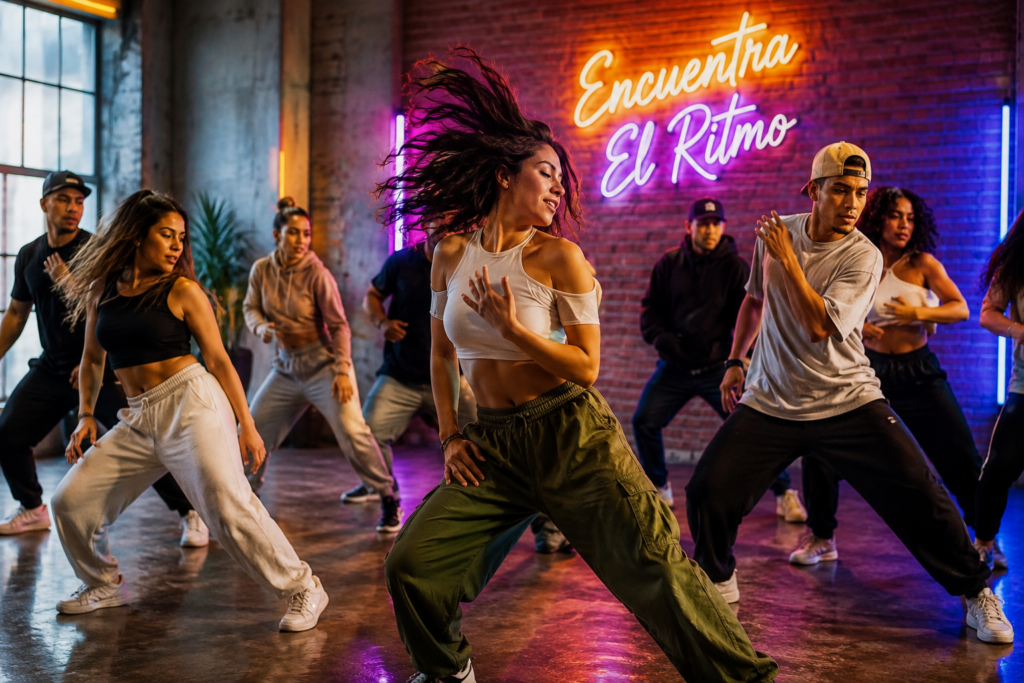
“Encuentra El Ritmo” in Dance Culture
If you search online, you’ll notice dance schools LOVE this phrase.
And honestly, it fits perfectly.
Dance is one of the clearest examples of rhythm becoming emotional instead of technical.
Nobody walks into a dance studio already confident. Most people start awkwardly. Some people count steps in panic. Others accidentally move in the exact opposite direction of everyone else.
Again… personal experience.
But eventually, something clicks.
You stop overthinking.
You stop forcing movement.
You start feeling the music instead of analyzing it.
That’s “encuentra el ritmo.”
Not just hearing the beat.
Feeling comfortable inside it.
Why “Find the Rhythm” Is Bigger Than Music
This is where the phrase gets interesting.
At some point, “find the rhythm” stopped being only about songs and dancing.
Now people use it for almost everything:
- Fitness
- Productivity
- Relationships
- Mental health
- Writing
- Studying
- Creative work
- Daily routines
And honestly, it works surprisingly well.
Because most people don’t need a perfect system.
They need consistency.
That’s rhythm.
Finding Rhythm in Everyday Life
There’s a huge difference between being busy and actually having rhythm.
Busy feels chaotic.
Rhythm feels sustainable.
You can see it everywhere:
- Athletes finding momentum
- Students creating study habits
- Writers developing creative flow
- Gamers are getting “locked in.”
- Musicians improvising naturally
- People are finally fixing their sleep schedule after weeks of terrible decisions.
Rhythm creates stability without making life boring.
And I think that’s why this phrase resonates with so many people online right now.
Social Media and the “Rhythm” Trend
TikTok and Instagram have absolutely helped phrases like this spread faster.
You’ll see captions like:
- “Find your rhythm.”
- “Move at your own pace.”
- “Trust the rhythm of your life.”
- “Encuentra el ritmo”
Some are motivational.
Some are aesthetic.
Some are attached to dancing videos.
Some are attached to people making coffee in slow motion for no reason whatsoever.
But the phrase works because it’s flexible.
It can sound:
- Inspirational
- Artistic
- Relaxed
- Emotional
- Motivational
- Creative
That’s marketing gold, honestly.
The Emotional Meaning Behind “Encuentra El Ritmo”
Here’s where things get a little deeper.
A lot of people feel disconnected these days.
Burnout is common.
Stress is common.
Feeling overwhelmed is common.
So a phrase like “find the rhythm” quietly suggests:
- Slow down
- Reconnect
- Stop fighting yourself
- Stop rushing every moment
It’s not saying:
“Be perfect.”
It’s saying:
“Find what works naturally for you.”
That’s a much healthier message.
Why Spanish Phrases Often Sound More Emotional
Okay, this might be subjective, but Spanish has a certain emotional musicality that English sometimes lacks.
“Find the rhythm” sounds nice.
But “Encuentra El Ritmo” sounds cinematic.
It feels warmer.
More expressive.
More artistic.
That’s one reason brands, musicians, and creators often keep Spanish phrases untranslated even when audiences speak English.
The vibe matters.
And yes, “vibe” is absolutely the correct academic term here.
How Brands Use “Encuentra El Ritmo”
This phrase is extremely marketable because it works across multiple industries.
You’ll see similar slogans in:
- Fitness campaigns
- Dance schools
- Music apps
- Lifestyle brands
- Wellness blogs
- Travel marketing
- Fashion campaigns
Why?
Because rhythm represents movement and identity.
Brands love emotional language that feels personal without being too specific.
“Find the rhythm” sounds motivational while still sounding cool.
That balance is surprisingly difficult to achieve.
Rhythm and Productivity: Surprisingly Connected
This part surprised me when I started thinking about it.
Productivity advice online often focuses on:
- Working harder
- Waking up earlier
- Becoming ultra-disciplined
- Optimizing every second of existence
Which honestly sounds exhausting.
But rhythm-based productivity feels different.
Instead of forcing constant intensity, rhythm focuses on:
- Sustainable habits
- Natural energy patterns
- Momentum
- Consistency
And that’s usually more realistic.
People who “find their rhythm” often perform better long-term because they stop fighting themselves constantly.
Creative People Understand Rhythm Best
Writers, artists, musicians, and designers talk about rhythm all the time.
Not always literally.
But creatively? Absolutely.
Some days, ideas flow naturally.
Other days, your brain feels like an old laptop with 47 tabs open.
Creative rhythm matters because creativity rarely responds well to pressure.
Sometimes the best work happens when you relax enough to let ideas move naturally.
That’s another reason this phrase feels powerful.
“Find the Rhythm” in Fitness and Sports
Fitness culture also loves this idea.
And honestly, it makes sense.
People often quit workouts because they try to go from:
“Occasionally walks outside.”
to
“Professional athlete training montage”
in about three days.
Rhythm matters more than intensity.
A sustainable workout routine beats unrealistic motivation every single time.
Athletes talk about rhythm constantly:
- Rhythm in running
- Rhythm in breathing
- Rhythm in teamwork
- Rhythm in performance
Sports are deeply connected to timing and flow.
Without rhythm, everything feels forced.
The Psychological Side of Rhythm
There’s actual psychology behind why rhythm matters to humans.
Humans naturally respond to:
- Patterns
- Repetition
- Timing
- Music
- Predictability
Rhythm can reduce stress because it creates familiarity.
That’s why routines often help people feel calmer.
Your brain likes knowing what comes next.
Even simple daily rhythms help:
- Morning coffee rituals
- Study schedules
- Exercise habits
- Sleep routines
- Listening to music while working
Tiny rhythms create emotional structure.
Why “Find Your Rhythm” Is Better Than “Be Perfect”
I genuinely think this phrase works because it feels human.
Perfection sounds impossible.
Rhythm sounds achievable.
You don’t need flawless timing.
You just need movement.
Some days, rhythm means productivity.
Some days rhythm means rest.
Both count.
And honestly, that’s refreshing compared to the nonstop “grind culture” mindset online.
Common Situations Where You’ll Hear “Encuentra El Ritmo”
Here are some places this phrase commonly appears:
Music and Dance
Probably the most obvious use.
Workout Programs
Especially cardio, Zumba, or fitness classes.
Motivational Content
Self-improvement blogs love rhythm metaphors.
Lifestyle Branding
Because it sounds emotional and stylish.
Language Learning
Spanish learners often encounter this phrase early because it’s memorable.
Social Media Captions
Especially travel, dancing, and wellness content.
Is “Encuentra El Ritmo” Grammatically Correct?
Yes, absolutely.
It’s a proper Spanish phrase.
“Encuentra” is the command form of the verb “encontrar,” meaning “to find.”
So the phrase literally gives an encouraging instruction:
- Find the rhythm
- Discover the rhythm
- Get into the flow
Native Spanish speakers would understand it naturally.
Similar Phrases in English
If you like the vibe of “Encuentra El Ritmo,” here are some similar English expressions:
- Find your groove
- Get into the flow
- Catch the beat
- Find your pace
- Move with confidence
- Stay in sync
- Feel the music
- Go with the flow
Each has a slightly different tone, but they all connect to rhythm and balance.
Why Rhythm Matters More Than Speed
This might be the biggest lesson hidden inside the phrase.
People obsess over speed:
- Faster success
- Faster growth
- Faster results
- Faster productivity
But rhythm is usually more important.
Fast progress without rhythm leads to burnout.
Rhythm creates longevity.
Whether it’s:
- learning a language,
- building confidence,
- improving fitness,
- studying,
- or creating art,
Consistency beats intensity most of the time.
That’s not just motivational talk either. It’s a practical reality.
The Internet’s Obsession With “Flow State”
Another reason this phrase connects today is that people are obsessed with “flow state.”
That feeling where:
- Time disappears
- Work feels natural
- Creativity increases
- Focus becomes easier
That’s rhythm too.
Athletes experience it.
Artists experience it.
Gamers experience it.
Writers experience it.
And honestly, even washing dishes feels slightly less annoying when you accidentally enter flow state with good music playing.
Can You Actually Learn Rhythm?
Yes.
And not just musically.
Rhythm develops through repetition and awareness.
You learn:
- timing,
- consistency,
- pacing,
- and emotional balance.
Nobody starts naturally synchronized with life.
Everyone feels awkward at first.
That’s normal.
The goal isn’t perfection.
It’s a connection.
A Small Personal Lesson About Rhythm
One thing I’ve personally noticed is that life gets easier when you stop copying other people’s pace.
Some people thrive on waking up at 5 AM.
Some people do their best work at midnight.
Some people need structure.
Others need flexibility.
Finding your rhythm matters more than forcing someone else’s.
That idea sounds simple, but honestly, it changes everything.
SEO and Cultural Popularity of “Encuentra El Ritmo”
From a blogging and SEO perspective, this keyword has interesting appeal because it combines:
- Spanish language curiosity
- Music culture
- Motivational themes
- Lifestyle relevance
People search for it because they:
- heard it in a song,
- saw it online,
- want a translation,
- or connect emotionally with the phrase.
And once people understand the meaning, they often realize it applies to much more than language.
FAQs About “Encuentra El Ritmo” in English
What does “Encuentra El Ritmo” mean in English?
It translates directly to “Find the rhythm.”
Is “Encuentra El Ritmo” a common Spanish phrase?
Yes, especially in music, dance, motivational content, and lifestyle branding.
Does the phrase only relate to music?
No. While rhythm starts with music, the phrase is often used metaphorically for balance, flow, consistency, and confidence in life.
Why does “Encuentra El Ritmo” sound more emotional than “Find the Rhythm”?
Spanish often feels more expressive and musical in pronunciation, which gives the phrase extra emotional impact.
Can “find the rhythm” refer to personal growth?
Absolutely. Many people use the phrase to describe finding balance, confidence, routines, or emotional stability.
Is “Encuentra El Ritmo” used in marketing?
Very often. It works well for fitness brands, dance programs, music promotions, and motivational campaigns.
Final Thoughts on “Encuentra El Ritmo” in English
At first glance, “Encuentra El Ritmo in english” simply means “Find the Rhythm.”
But the more you think about it, the more meaningful the phrase becomes.
It’s about:
- movement,
- confidence,
- balance,
- creativity,
- consistency,
- and learning how to move through life naturally instead of forcefully.
And honestly, that’s probably why people connect with it so much.
Because most of us are still trying to find our rhythm in one way or another.
Sometimes through music.
Sometimes through routines.
Sometimes through creativity.
Sometimes just about surviving a busy week without forgetting why we started in the first place.
So if life feels chaotic lately, maybe the answer isn’t speeding up.
Maybe it’s exactly what the phrase suggests:
Encuentra el ritmo.
