

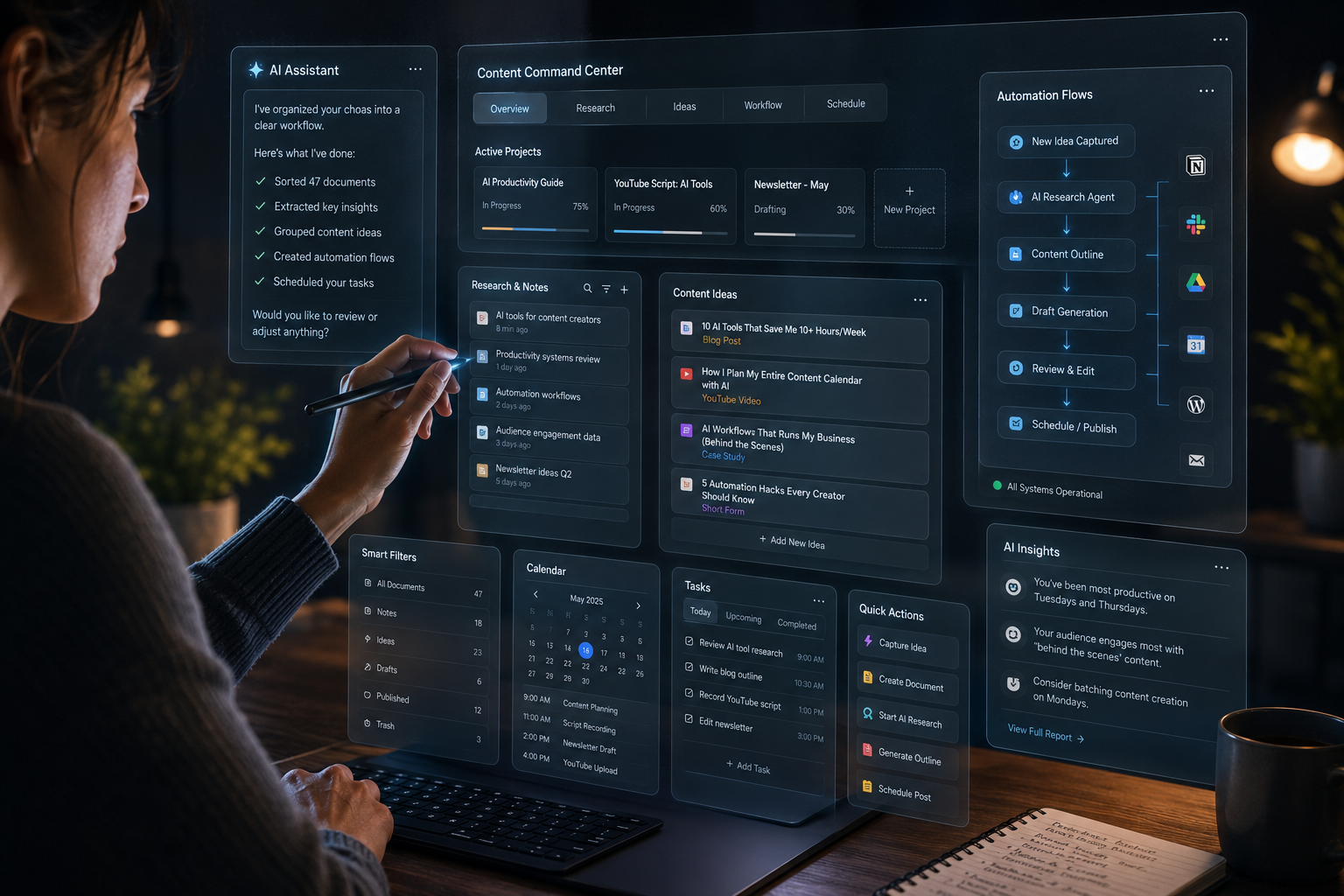
The internet moves fast. One week everyone is talking about a new productivity app, and the next week there’s another AI tool promising to “change everything.” Most of them disappear quietly after the hype fades. But every now and then, something sticks around long enough to make people genuinely curious.
That’s where TryEden comes in.
Over the past few months, I kept seeing people mention it in random places. A tweet here. A Reddit thread there. Someone casually dropping it into a productivity discussion like it was already common knowledge. At first, I ignored it because, honestly, there are already too many AI platforms competing for attention.
But curiosity eventually wins.
So I spent some time exploring TryEden, reading discussions, watching how people actually use it, and testing what makes it different from the usual “AI assistant” platforms flooding the market.
And surprisingly? It’s actually interesting.
Not in the “this will replace humanity tomorrow” kind of way. More in the practical, “this could genuinely save people time” kind of way.
If you’ve been wondering what TryEden is, why people are talking about it, or whether it’s worth paying attention to, this article breaks it all down in a relaxed, no-hype way.
What Is TryEden?
At its core, TryEden appears to focus on AI-powered workflows, automation, and productivity tools designed to help people organize work more efficiently.
That sounds incredibly generic at first because literally every AI startup says the same thing now.
But the difference is usually in how the experience feels.
Some AI tools feel like unfinished experiments. Others feel so complicated that you need a tutorial just to rename a file. TryEden seems to be aiming for a smoother middle ground where automation feels accessible instead of overwhelming.
Think of it like this:
Instead of manually juggling documents, tasks, research, notes, and repetitive workflows, the platform tries to reduce friction between those steps.
And honestly, that’s probably why people are paying attention.
Most people don’t actually want “AI.” They want less annoying work.
Why TryEden Is Trending Right Now
A few reasons explain the recent attention around TryEden.
1. AI Fatigue Is Real
People are tired of exaggerated promises.
We’ve reached the stage where every product claims to be “revolutionary,” “game-changing,” or “the future of work.” After hearing that 400 times, users become skeptical.
What makes TryEden interesting is that many conversations around it feel surprisingly practical.
Instead of saying:
“This will transform civilization.”
People are saying things like:
- “This saved me two hours.”
- “My workflow feels cleaner now.”
- “It’s actually useful for organizing projects.”
- “The automation setup is easier than I expected.”
That kind of reaction usually matters more than flashy marketing.
2. People Want Better Workflow Systems
Modern work is messy.
You’ve got:
- browser tabs everywhere
- screenshots you forgot to organize
- half-written notes
- random Google Docs
- Slack messages disappearing into the void
- AI chats scattered across platforms
At some point, everything starts feeling like digital clutter.
TryEden seems to tap into the growing demand for tools that centralize and simplify work without becoming another complicated dashboard nobody wants to open.
And honestly, that timing makes sense.
3. Automation Is Becoming Normal
A couple of years ago, automation sounded technical and intimidating.
Now?
Even casual users want tools that can:
- summarize information
- organize tasks
- connect apps
- automate repetitive actions
- streamline content workflows
- reduce manual busywork
The shift happened quietly, but it’s happening fast.
TryEden appears positioned right in the middle of that trend.
My First Impression of TryEden
The first thing I noticed was that the idea behind the platform feels bigger than a single feature.
That’s important.
A lot of AI products are basically one clever trick wrapped in a shiny interface. You use them twice, think “that’s neat,” and then forget they exist.
TryEden feels more workflow-oriented.
It’s less about one magical button and more about improving how work moves from one step to another.
And weirdly enough, that’s what makes it more useful.
Because real productivity problems usually aren’t about writing one paragraph or generating one image. They’re about the messy chain of tasks surrounding everything else.
The Rise of AI Workflow Platforms
To understand why TryEden matters, you have to look at the bigger trend happening online.
We’re entering the “workflow era” of AI.
The first phase of AI tools was mostly novelty:
- AI art generators
- funny chatbots
- text generation demos
- social media experiments
The second phase became more practical:
- AI writing assistants
- coding tools
- research helpers
- meeting summaries
Now we’re entering a phase where people want AI integrated into complete systems.
That means:
- connected workflows
- automation pipelines
- document handling
- task management
- research organization
- productivity ecosystems
TryEden seems built around that direction.
And honestly, that’s probably smarter long term.
Who Is TryEden Actually For?
This is the interesting part because the platform doesn’t seem limited to one specific audience.
Content Creators
Bloggers, marketers, YouTubers, and social media managers are constantly managing scattered information.
Ideas appear everywhere:
- browser tabs
- screenshots
- notes apps
- AI chats
- random documents
A platform that organizes workflows more efficiently can genuinely help.
As someone who spends time around blogging communities, I can easily see why creators would be interested.
Freelancers
Freelancers deal with:
- client notes
- deadlines
- project files
- invoices
- communication
- revisions
- research
Anything that reduces organizational chaos becomes valuable very quickly.
And let’s be honest, freelancers are usually testing new productivity tools faster than anyone else.
Small Teams
Small teams often suffer from “tool overload.”
One app for chat.
Another for notes.
Another for tasks.
Another for AI.
Another for storage.
At some point, the workflow itself becomes exhausting.
Tools like TryEden seem to appeal to teams trying to simplify that situation.
What Makes People Stay With a Tool?
This is something tech companies rarely admit.
Most users don’t care about advanced features.
They care about whether something:
- saves time
- feels intuitive
- reduces stress
- removes friction
- becomes part of their routine
That’s it.
The reason many productivity apps fail is because they accidentally create more work instead of less.
You spend hours customizing dashboards only to abandon the app three weeks later.
We’ve all done it.
I once spent an entire afternoon color-coding a task management system that I never opened again. Peak productivity behavior, obviously.
The real test for TryEden will be whether people continue using it consistently after the excitement fades.
That’s where good workflow design matters more than marketing.
The Bigger AI Productivity Shift
One thing I find fascinating is how AI tools are quietly changing work habits.
Not dramatically.
Not overnight.
Just gradually.
People are starting to expect:
- instant summaries
- smart organization
- workflow suggestions
- faster research
- automated repetitive tasks
Five years ago, manually sorting through everything felt normal.
Now it feels unnecessarily slow.
That expectation shift is huge.
And platforms like TryEden are emerging right at the moment when users are becoming ready for more integrated AI assistance.
Is TryEden Replacing Human Work?
Not really.
At least not in the dramatic way people online sometimes describe AI.
The better way to think about tools like this is:
- reducing repetitive tasks
- improving organization
- speeding up workflows
- handling digital clutter
Humans still decide:
- strategy
- creativity
- judgment
- priorities
- communication
- final decisions
AI productivity tools are usually strongest when they support human work rather than replace it.
And honestly, that balance is probably healthier.
The Problem With Too Many Productivity Apps
Here’s the funny thing about productivity culture:
Sometimes the quest to become more productive becomes the least productive thing imaginable.
You download:
- a planning app
- a focus app
- a calendar app
- a note-taking app
- an AI app
- a project management tool
Suddenly your “workflow” requires managing six separate platforms before you even begin actual work.
That’s why integrated systems are gaining attention.
People want fewer disconnected tools.
TryEden seems to benefit from that shift in mindset.
Could TryEden Become Mainstream?
Possibly.
But mainstream success in the AI world depends on a few things.
Simplicity
People abandon complicated software quickly.
If TryEden keeps the experience approachable, it has a better chance of wider adoption.
Reliability
Nothing kills momentum faster than inconsistent performance.
Users can forgive limited features.
They rarely forgive broken workflows.
Real Utility
The AI market is crowded with products that sound impressive but solve imaginary problems.
The tools that survive usually help people in very practical ways.
The Community Factor
One underrated reason tools grow fast is community discussion.
People love sharing:
- workflow setups
- automation tricks
- productivity systems
- AI experiments
- efficiency hacks
Once users begin posting examples publicly, curiosity spreads naturally.
That organic attention often matters more than paid advertising.
And TryEden seems to be benefiting from that kind of momentum right now.
My Personal Take After Exploring It
After looking into TryEden, I don’t think the appeal is about flashy AI demos.
The appeal is simpler.
People are overwhelmed.
Digital work has become chaotic.
Information overload is constant.
Everyone has too many tabs open.
A platform that reduces friction and organizes workflows more intelligently will naturally attract attention.
That doesn’t mean every AI tool becomes essential overnight.
But it does explain why people are interested.
And honestly, I think the future winners in AI won’t necessarily be the loudest companies.
They’ll probably be the ones that quietly make everyday work less annoying.
Tips Before Trying Any AI Productivity Platform
Whether it’s TryEden or another tool entirely, a few things help.
Start Small
Don’t automate your entire life on day one.
Pick one repetitive task first.
That’s usually the best way to test whether a workflow actually helps.

Avoid Overcomplicating Things
The irony of productivity tools is that they can become distractions themselves.
If setting up the system takes longer than the task you’re solving, something went wrong.
Focus on Real Problems
Good workflows solve actual pain points.
Not imaginary “optimized lifestyles” that only exist in productivity YouTube videos.
SEO and Content Creation Potential
One thing content creators may appreciate is how platforms like TryEden can potentially help with:
- research organization
- draft management
- workflow planning
- brainstorming
- content systems
Bloggers especially deal with massive amounts of scattered information.
Ideas rarely arrive in a neat, organized format.
Usually they arrive while:
- scrolling late at night
- reading comments
- watching videos
- opening 17 tabs accidentally
So centralized workflow systems become genuinely useful over time.
The Future of AI Workflow Tools
I think we’re heading toward a future where AI becomes less visible.
That sounds strange, but hear me out.
Right now, AI tools market themselves aggressively:
- “AI-powered”
- “AI-first”
- “AI-enhanced”
Eventually people will stop caring about the label.
They’ll care about whether the tool works smoothly.
The same way nobody says:
“electricity-powered refrigerator.”
It’s just expected.
AI workflow platforms like TryEden may eventually blend naturally into everyday digital work instead of feeling like separate experimental tools.
Common Criticisms People Have About AI Platforms
To keep things balanced, not everyone loves AI productivity systems.
Some common concerns include:
- privacy questions
- subscription overload
- dependency on automation
- learning curves
- feature complexity
Those concerns are valid.
People should always understand:
- what data they share
- how automation works
- what limitations exist
No productivity platform is magically perfect.
And honestly, skepticism is healthy.
Why Curiosity Around TryEden Keeps Growing
At the moment, TryEden sits in an interesting position.
It benefits from several trends happening at once:
- AI adoption
- workflow automation
- productivity culture
- creator economy growth
- digital organization fatigue
That combination creates strong curiosity online.
Especially among people who spend most of their day working digitally.
Final Thoughts on TryEden
After spending time researching and exploring TryEden, I understand why people are paying attention to it.
Not because it’s some sci-fi miracle platform.
Not because it instantly transforms productivity.
But because it seems aligned with what users actually need right now:
- simpler workflows
- better organization
- less repetitive work
- smarter automation
- cleaner digital systems
And honestly, that’s enough.
The future of productivity probably won’t come from one giant revolutionary moment.
It’ll come from dozens of small improvements that quietly remove friction from daily work.
TryEden feels like part of that bigger shift.
Whether it becomes a major long-term platform or simply influences how future productivity tools evolve, it’s definitely part of an important conversation happening around AI and workflow automation right now.
And if nothing else, it’s another reminder that everyone on the internet is still desperately trying to figure out how to manage their browser tabs.
Some battles may never be won.
FAQs About TryEden
What is TryEden used for?
TryEden is generally associated with AI-powered productivity, workflow management, and automation tools designed to simplify digital work processes.
Is TryEden an AI platform?
Yes, TryEden appears connected to AI-assisted workflows and productivity systems that help users organize and automate tasks more efficiently.
Why is TryEden trending online?
People are discussing TryEden because of growing interest in AI workflow tools, automation systems, and productivity platforms that reduce repetitive digital tasks.
Who can benefit from TryEden?
Content creators, freelancers, bloggers, remote workers, marketers, and small teams may find workflow automation platforms like TryEden useful.
Is TryEden beginner-friendly?
Many users seem interested because the platform aims to simplify workflows instead of making automation feel overly technical or complicated.
Can TryEden improve productivity?
Potentially yes. Tools focused on workflow organization and automation can help reduce manual tasks and improve efficiency when used properly.
