

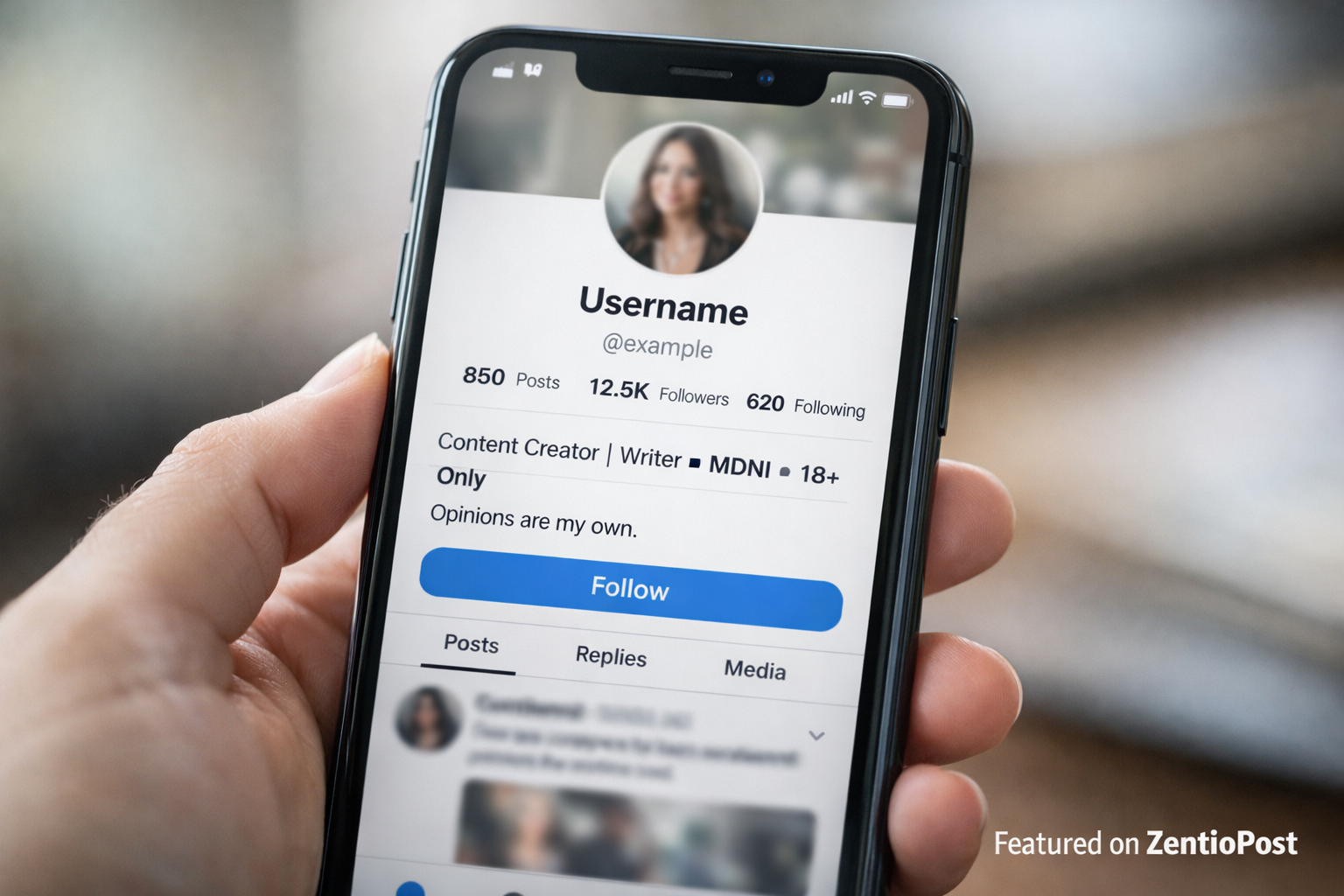
You’ve probably seen it in bios, comments, or random posts online. Just four letters, often written in all caps: MDNI.
At first glance, it doesn’t look like much. No context, no explanation. Just… MDNI.
And naturally, that leads to curiosity. What does it mean? Why do people use it? And why does it seem to show up more often in certain spaces than others?
If you’ve been wondering the same thing, you’re not alone. Let’s break it down in a way that actually makes sense.
What Does MDNI Mean?
MDNI stands for:
“Minors Do Not Interact.”
It’s a phrase commonly used online to tell people under 18 not to engage with certain content, accounts, or discussions.
You’ll usually see it in places like:
- Social media bios
- Content creator profiles
- Comment sections
- Online communities or forums
It acts as a clear boundary. The person posting is saying, “If you’re a minor, this space isn’t for you.”
Simple as that.
Why Do People Use MDNI?
Once you understand the meaning, the next question is obvious: why use it at all?
The short answer is protection. But there’s a bit more to it.
1. Setting Clear Boundaries
Some online spaces are meant for adults only. This could be due to mature topics, language, or discussions that aren’t appropriate for younger audiences.
MDNI helps creators make that boundary visible.
2. Avoiding Responsibility Issues
On the internet, things can get complicated quickly. If minors interact with certain types of content, it can create legal or ethical concerns.
By using MDNI, creators are clearly stating that minors are not welcome in that space.
3. Community Guidelines
In some online communities, especially niche ones, MDNI is part of the culture. It signals that the space is intended for adults who understand the context.
4. Content Sensitivity
Not all content is explicit, but some topics are still better suited for adults. Think:
- Heavy discussions
- Personal or emotional content
- Dark humor
- Adult-oriented conversations
MDNI helps filter the audience.
Where You’ll Commonly See MDNI
MDNI isn’t everywhere, but once you notice it, you start seeing it more often.
Here are some common places it shows up:
Social Media Bios
Creators often include “MDNI” in their bio as a quick warning.
Content Descriptions
Sometimes it appears at the top of posts or threads.
Community Rules
Certain groups or forums include it as part of their guidelines.
Comments or Replies
People may use it when responding to others, especially if they suspect a younger audience is engaging.
How MDNI Is Different From Other Warnings
You might be thinking, “Isn’t this just like saying 18+?”
Not exactly.
While both serve a similar purpose, MDNI is a bit more direct.
Here’s how it compares:
- 18+ → Indicates age restriction
- NSFW (Not Safe For Work) → Warns about content type
- MDNI → Directly tells minors not to engage
MDNI isn’t just a label. It’s an instruction.
The Psychology Behind Terms Like MDNI
Something is interesting about how people respond to simple phrases online.
A short acronym like MDNI does a few things:
- It creates instant clarity
- It signals community norms
- It sets expectations without long explanations
People don’t want to read paragraphs of rules. A quick tag like MDNI does the job in seconds.
It’s efficient, and that’s why it spreads.
Is MDNI Always Followed?
Here’s the honest part. Not always.
Just because someone writes MDNI doesn’t mean everyone will respect it.
The internet doesn’t have strict enforcement for things like this. It relies heavily on:
- User honesty
- Platform moderation
- Community culture
That said, most people who understand the meaning do respect it, especially in well-moderated spaces.
Why MDNI Has Become More Popular
If you feel like you’ve only started seeing MDNI recently, you’re not imagining it.
There are a few reasons for its growth.
More Awareness Around Online Safety
People are more conscious about who interacts with their content.
Growth of Niche Communities
Smaller online communities often develop their own language. MDNI is one of those terms that spread from these spaces.
Simplicity
It’s short, clear, and easy to understand once you know it.
That makes it perfect for fast-moving platforms.
Should You Use MDNI?
If you create content or run an online profile, you might be wondering whether you should use it too.
Here’s a simple way to think about it.
You might use MDNI if:
- Your content is meant for adults
- You discuss mature topics
- You want to avoid underage interaction
You might not need it if:
- Your content is general or family-friendly
- You’re targeting a broad audience
- There’s no sensitive material involved
It really comes down to the type of content you share.
Common Misunderstandings About MDNI
Like many internet terms, MDNI is often misunderstood.
Let’s clear up a few things.
It Doesn’t Block Anyone Automatically
MDNI is a statement, not a technical filter.
It Doesn’t Replace Platform Rules
Even if you use MDNI, you still need to follow the platform’s guidelines.
It’s Not Always About Explicit Content
Sometimes it’s just about keeping discussions within an adult audience.
How to Respect MDNI as a User
If you come across MDNI in someone’s bio or post, the respectful thing to do is simple.
- If you’re under 18, don’t engage
- Avoid commenting or messaging
- Move on to content that’s appropriate for you
It’s about respecting boundaries, even in digital spaces.
MDNI in Different Online Communities
Different platforms use MDNI slightly differently.
On Social Media Platforms
You’ll see it in bios and pinned posts.
In Creative Communities
Artists and writers often use MDNI to control who interacts with their work.
In Discussion Forums
It can appear as part of the rules for specific threads or topics.
The meaning stays the same, but the context changes slightly.
The Evolution of Internet Language
MDNI is a good example of how internet language evolves.
New terms appear all the time, shaped by:
- Community needs
- Platform culture
- Social awareness
A few years ago, MDNI wasn’t widely used. Now, it’s part of everyday online language in certain spaces.
And that’s how digital communication works. It adapts quickly.
FAQ About MDNI Meaning
What does MDNI stand for?
MDNI stands for “Minors Do Not Interact,” meaning people under 18 should not engage with the content or account.
Where is MDNI commonly used?
It’s commonly used in social media bios, online communities, forums, and content descriptions.
Is MDNI the same as 18+?
Not exactly. While both indicate adult content, MDNI directly tells minors not to interact.
Can MDNI stop minors from seeing content?
No. It’s not a technical restriction, just a guideline or boundary.
Why do people put MDNI in their bio?
They use it to set boundaries, protect themselves, and make it clear that their content is for adults.
Is MDNI only used for explicit content?
No. It can also be used for mature discussions, sensitive topics, or adult-focused communities.
Final Thoughts
The internet is full of small phrases that carry a lot of meaning. MDNI is one of those.
At its core, it’s about boundaries. Clear, simple, and direct.
It doesn’t block anyone. It doesn’t enforce anything. But it does communicate intent.
And in a space as open and fast-moving as the internet, that kind of clarity matters more than you might think.
So the next time you see MDNI, you’ll know exactly what it means and why it’s there.
Also Read: ZENTIOPOST
