

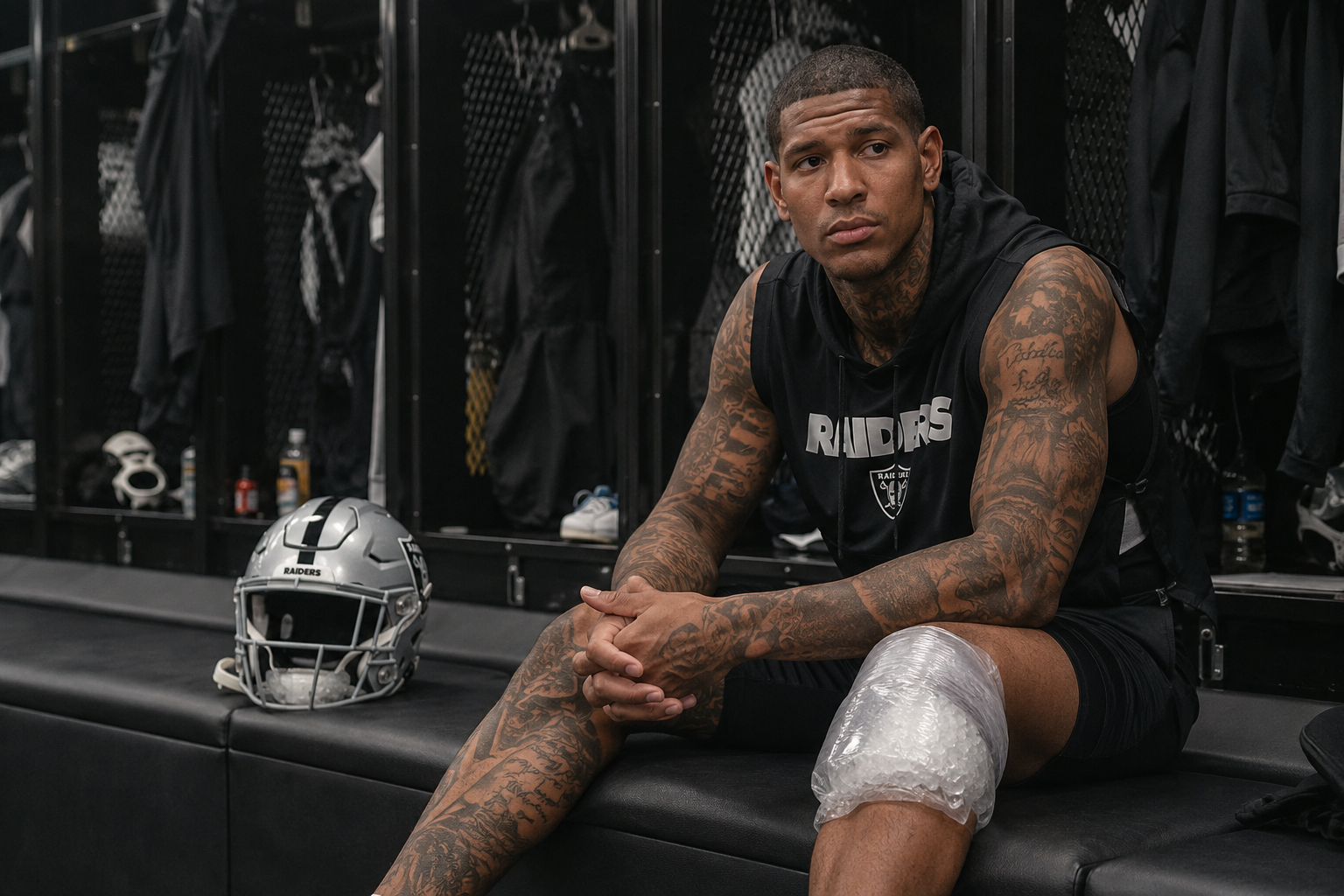
When people search for “Darren Waller injury,” they’re usually trying to figure out one thing: what actually happened to one of the NFL’s most talented tight ends?
And honestly, it’s a fair question.
It feels like every time Darren Waller starts building momentum, another injury headline pops up. One week, he looks unstoppable, catching passes like a wide receiver trapped in a tight end’s body. The next week, fantasy football managers are panic-searching updates at 2 a.m. while fans debate whether he’ll ever return to peak form.
I’ve followed Waller’s career for years, and his journey has always felt bigger than football. Sure, the stats matter. The touchdowns matter. But his story has become one of resilience, frustration, recovery, and the brutal reality of playing in the NFL.
In this article, we’re diving deep into the Darren Waller injury timeline, what caused so many setbacks, how it affected his career, and why fans still can’t stop rooting for him.
And yes, we’ll also talk about the emotional side of injuries because athletes are human beings, not just fantasy football points.
The Rise of Darren Waller
Before talking about injuries, it’s important to understand why people care so much about Waller in the first place.
Darren Waller wasn’t one of those NFL stars who arrived with nonstop hype. His path was messy, difficult, and honestly pretty inspiring.
After being drafted by the Baltimore Ravens, his early career never fully clicked. He struggled with addiction issues and nearly lost football altogether. Many players disappear after that point.
Instead, Waller rebuilt his life.
And when he joined the Las Vegas Raiders, something changed.
Suddenly, he became one of the most dangerous offensive weapons in football.
At his best, Waller was impossible to defend:
- Too fast for linebackers
- Too big for cornerbacks
- Too athletic for safeties
Watching him play during his peak Raiders years felt unfair sometimes. Defensive coordinators looked exhausted trying to stop him.
That’s why every Darren Waller injury update hits fans so hard. People know how special he can be when healthy.
The Injuries Started Adding Up
NFL injuries happen to everyone. That’s part of the game.
But with Darren Waller, the problem became consistency. One injury turned into another, and another after that.
Fans started hearing the same phrases repeatedly:
- Hamstring issue
- Knee soreness
- Soft tissue injury
- Limited practice
- Questionable for Sunday
If you watch football long enough, you notice something about soft tissue injuries. They linger. They don’t always fully disappear. And for skill-position players who rely on explosiveness, they can quietly change everything.
Waller’s body started betraying him at the worst times.
The Hamstring Injuries Were a Major Problem
If there’s one thing connected heavily to the Darren Waller injury story, it’s hamstrings.
Hamstring injuries are sneaky.
At first, they sound minor. Fans hear “day-to-day” and assume the player will be back immediately. Then suddenly:
- The player misses two weeks
- Then four weeks
- Then returns at 70%
- Then aggravates the injury again
That cycle became painfully familiar.
For a player like Waller, whose game depends on sharp cuts and acceleration, hamstrings are everything. Tight ends don’t just jog routes. They explode off the line, pivot mid-route, absorb contact, and sprint against defenders every snap.
One tiny weakness in the hamstring changes the entire equation.
I remember watching some of his later games and thinking he looked hesitant at times. Not mentally hesitant, but physically cautious. Athletes coming off repeated injuries sometimes move differently without even realizing it.
And honestly, who could blame him?
Fans Became Frustrated… But Also Sympathetic
Sports fans are funny.
One minute, te they’re screaming at players on social media. The next minute, they’re defending them like family members.
With Waller, I noticed something interesting over the years. Even frustrated fans still seemed to genuinely like him.
Why?
Because he never came across as lazy or careless.
He always seemed honest about recovery. Professional. Mature. Accountable.
That matters.
People tend to support athletes who show authenticity, and Waller always carried himself with a certain openness that made fans root for him beyond fantasy football stats.
Still, frustration definitely existed.
Fantasy football communities especially became emotional whenever another Darren Waller injury report surfaced. Some managers joked that drafting him required emotional insurance coverage.
And honestly, I laughed at those memes too.
The Move to the Giants Brought New Hope
When the New York Giants acquired Darren Waller, many fans believed it could be a fresh start.
New system. New coaching staff. New environment.
Sometimes a change helps athletes mentally and physically.
For a while, the excitement felt real.
Giants fans imagined:
- Red zone dominance
- Huge third-down conversions
- Veteran leadership
- Matchup nightmares for defenses
And there were flashes of brilliance.
That’s the frustrating part with Waller. He’d remind everyone exactly how elite he could still be.
Then another injury concern would appear.
It started feeling like watching a great movie that constantly buffers every ten minutes.
NFL Wear and Tear Is Brutal
I think casual fans sometimes underestimate how violent football really is.
These aren’t ordinary collisions.
Imagine sprinting full speed while someone built like a refrigerator launches into your legs.
Now repeat that hundreds of times.
Even elite athletes eventually break down.
Tight end might actually be one of the hardest positions physically because players do everything:
- Block defensive linemen
- Run receiver routes
- Absorb hits across the middle
- Fight through constant contact
And Waller’s style of play exposed him to huge impacts regularly.
You can only push the human body so far before something gives out.
The Mental Side of Injuries Nobody Talks About
This part matters more than people realize.
Physical recovery is only half the battle.
Repeated injuries can completely drain athletes emotionally.
Imagine spending months rehabbing:
- Early morning treatment sessions
- Endless stretching
- Pain management
- Conditioning work
- Watching teammates play without you
Then, finally returning…
Only to get hurt again.
That cycle can destroy confidence.
Athletes rarely admit it publicly because sports culture rewards toughness, but injury anxiety is real.
Sometimes players start wondering:
- “Can my body still handle this?”
- “Will I ever feel normal again?”
- “Am I becoming injury-prone?”
- “Do fans think I’m soft?”
Those thoughts pile up.
Waller has spoken openly throughout his career about personal struggles and mental health topics, which honestly made him one of the more relatable NFL personalities.
Darren Waller’s Retirement Conversations
At different points, retirement rumors started circulating around Darren Waller.
And honestly, they made sense.
Football takes a massive toll physically and mentally. For players who’ve battled injuries repeatedly, retirement discussions become unavoidable.
Some fans reacted emotionally:
- “He’s quitting too early.”
- “He still has talent left.”
- “One more healthy season!”
But from the player’s perspective, the calculation changes over time.
Health becomes more important.
Peace of mind matters more.
Long-term quality of life becomes real.
Former NFL players often talk about chronic pain after retirement. Knees, backs, hips, shoulders. Many struggle with normal daily activities years later.
When you think about that, the Darren Waller injury situation feels less like a sports debate and more like a human decision.
Why Fans Still Love Watching Him
Even after all the setbacks, people still get excited whenever Waller steps on the field.
That says a lot.
Some players lose fan support quickly after injuries pile up. Waller didn’t.
Part of that comes from how entertaining he is when healthy.
Watching him in space is genuinely fun:
- Smooth route running
- Long strides
- Big catch radius
- Athletic mismatches everywhere
He doesn’t move like a traditional tight end. At times, he looked more like a giant wide receiver.
And NFL fans never stop believing in talented players.
There’s always that thought:
“Maybe this year is the comeback.”
Social Media Made Injury Culture Worse
One thing I’ve noticed over the past few years is how social media has changed the way fans react to injuries.
Every update becomes instant drama.
A player misses practice and suddenly:
- Twitter panics
- Fantasy managers melt down
- YouTube channels post “breaking news.”
- Reddit threads explode
The Darren Waller injury coverage often felt like that.
Sometimes the internet treats injured athletes more like stock prices than human beings.
One bad update and people immediately start debating contracts, trade value, and whether a player is “washed.”
That pressure has to be exhausting.
Fantasy Football Changed the Conversation
Let’s be honest for a second.
Fantasy football absolutely shaped how many people viewed Darren Waller.
At his peak, he was a fantasy superstar. Having an elite tight end gives managers a huge advantage, so expectations became enormous.
But injuries turned him into one of the most stressful fantasy picks in football.
Every season became a gamble:
- Huge upside
- Major injury risk
- Constant status checks
I know people who swore they’d never draft him again…
Then drafted him again anyway.
That’s the power of talent.
Was Darren Waller Ever Fully Healthy?
This is something NFL fans debate constantly.
After repeated injuries, players sometimes technically return but never fully regain their previous explosiveness.
You’ll hear commentators say:
“He’s active, but not 100%.”
In football, almost nobody is fully healthy during the season anyway. But there’s a difference between “banged up” and physically limited.
With Waller, I sometimes wondered if his body ever truly reset after those early soft tissue issues started recurring.
Soft tissue injuries can become cyclical:
- Initial injury
- Compensation in movement
- Strain elsewhere
- Re-injury risk increases
That’s why recovery timelines often become unpredictable.
The NFL Can Be Ruthless
One harsh reality about professional football:
Availability matters almost as much as talent.
Teams need players on the field consistently. It sounds unfair sometimes, but that’s the business.
An injured superstar creates difficult questions:
- Can the team rely on him?
- Should they invest long-term?
- Is recovery sustainable?
- How much risk is acceptable?
These decisions affect contracts, roster building, and coaching strategies.
Even beloved players eventually face those conversations.
That’s part of what made the Darren Waller injury saga so complicated. Everyone knew the talent was real. The uncertainty came from durability.
Lessons Fans Can Learn From Waller’s Journey
Oddly enough, Waller’s career offers lessons beyond sports.
1. Recovery Isn’t Always Linear
People assume healing follows a perfect timeline. Real life rarely works like that.
Sometimes progress stalls.
Sometimes setbacks happen.
Sometimes recovery takes longer emotionally than physically.
2. Success Doesn’t Erase Struggles
Even after becoming an NFL star, Waller still faced difficult moments. Achievement doesn’t magically remove hardship.
3. Your Body Has Limits
Athletes look superhuman, but they’re still human. Eventually, the body demands attention.
4. Reinvention Is Possible
One reason Waller remains respected is that he completely rebuilt his life and career after early struggles.
That kind of comeback story sticks with people.
Media Narratives Around Injured Athletes
Sports media loves simple narratives:
- Hero
- Villain
- Comeback
- Bust
But real life is more complicated.
Injured players often get trapped between narratives:
- “Too injury-prone”
- “Mentally tough”
- “Unlucky”
- “Washed”
- “Potential comeback”
The truth is usually a mix of everything.
I think Waller’s story became emotionally compelling because fans saw genuine effort. Even when injured, he never seemed disconnected from the game.
That authenticity matters.
Could Darren Waller Have Had an Even Bigger Career?
Honestly? Probably yes.
If injuries never interfered, it’s easy to imagine Waller putting up even crazier numbers.
At his peak, he looked capable of dominating the position for years.
There were stretches where he genuinely felt unapproachable.
But sports history is full of “what if” careers:
- Players slowed by injuries
- Careers are shortened too early
- Potential interrupted by bad luck
That doesn’t erase greatness, though.
Even with setbacks, Waller built a career many athletes could only dream about.
Why Injury Stories Fascinate Fans
There’s something deeply human about comeback stories.
People connect emotionally with struggle more than perfection.
That’s probably why the Darren Waller injury conversation never really disappeared. Fans weren’t just tracking medical reports. They were following a personal journey.
Every return carried emotional weight:
- Could he regain form?
- Would this be different?
- Was the old Waller still there?
Sports become compelling when they feel personal, and Waller’s career always felt personal.
The Reality of Playing Through Pain
NFL players rarely discuss how much pain they actually tolerate weekly.
Most fans would probably be shocked.
By midseason, many players are managing:
- Bruises
- Sprains
- Muscle strains
- Joint inflammation
- Chronic soreness
And they still perform publicly under massive pressure.
Waller likely played through discomfort more often than fans realized. Many athletes do.
That doesn’t mean criticism disappears completely, but it adds perspective.
What Comes Next for Darren Waller?
That’s the big question.
Whether he continues playing, steps away permanently, or transitions into media or other projects, Waller’s impact already exists.
He proved:
- Redemption is possible
- Talent can re-emerge unexpectedly
- Personal growth matters
- Vulnerability and strength can coexist
And honestly, that’s bigger than football.
A lot of athletes hide behind clichés. Waller often felt refreshingly honest.
Final Thoughts on the Darren Waller Injury Story
The Darren Waller injury journey isn’t just about hamstrings, game reports, or fantasy football frustration.
It’s about the reality of professional sports.
One moment, you’re dominating defenses and looking unstoppable. Next, you’re battling recovery timelines while strangers debate your future online.
Waller’s career has included:
- Incredible highs
- Painful setbacks
- Emotional resilience
- Public pressure
- Genuine inspiration
And despite all the injuries, fans still remember how electric he looked at his best.
That says everything.
Some players are forgotten quickly once injuries arrive. Darren Waller never really was.
Maybe that’s because people saw more than just statistics. They saw someone constantly fighting to come back, even when the road kept getting harder.
And whether you’re a football fan or not, there’s something relatable about that.
FAQs About Darren Waller’s Injury
What injury did Darren Waller have?
Darren Waller dealt with multiple injuries throughout his NFL career, including recurring hamstring issues and other soft tissue injuries that caused missed games and limited performance.
Why was Darren Waller always injured?
There’s no single answer, but repeated soft tissue injuries, the physical demands of the tight end position, and accumulated NFL wear and tear likely contributed.
Did Darren Waller retire because of injuries?
Injuries were believed to be a major factor in retirement discussions surrounding Waller, along with the mental and physical demands of professional football.
Which NFL teams did Darren Waller play for?
Waller played for the Baltimore Ravens, Las Vegas Raiders, and New York Giants during his NFL career.
Was Darren Waller good when healthy?
Absolutely. At his peak, many fans and analysts considered him one of the most dangerous receiving tight ends in football.
What made Darren Waller unique as a tight end?
His combination of size, speed, route running, and athleticism made him extremely difficult for defenses to match up against.
