

There’s a phrase we all see, hear, and scroll past almost every day: “stay tuned.”
It shows up in videos, social media captions, TV promos, and even casual conversations.
And yet, if someone suddenly asked you to explain it clearly, you might pause for a second and think… “Wait, what does it actually mean again?”
I’ve been there too.
It’s one of those phrases that feels simple but has a bit more personality than people realize. So let’s break it down in a way that actually makes sense, without turning it into a boring dictionary lesson.
So, What Does “Stay Tuned” Mean?
At its core, “stay tuned” means to keep paying attention because more information is coming soon.
It’s like telling someone:
“Don’t go anywhere. I’m not done yet.”
Or in modern internet language:
“Stick around, the next update is worth it.”
It comes from old radio days when people had to literally tune their radios to a station literally. If they didn’t stay tuned properly, they’d miss the next part of the broadcast.
Now, we’ve just carried the phrase into the digital world.
Where You Usually Hear “Stay Tuned”
If you start noticing it, you’ll realize it’s everywhere. Let me show you a few common spots:
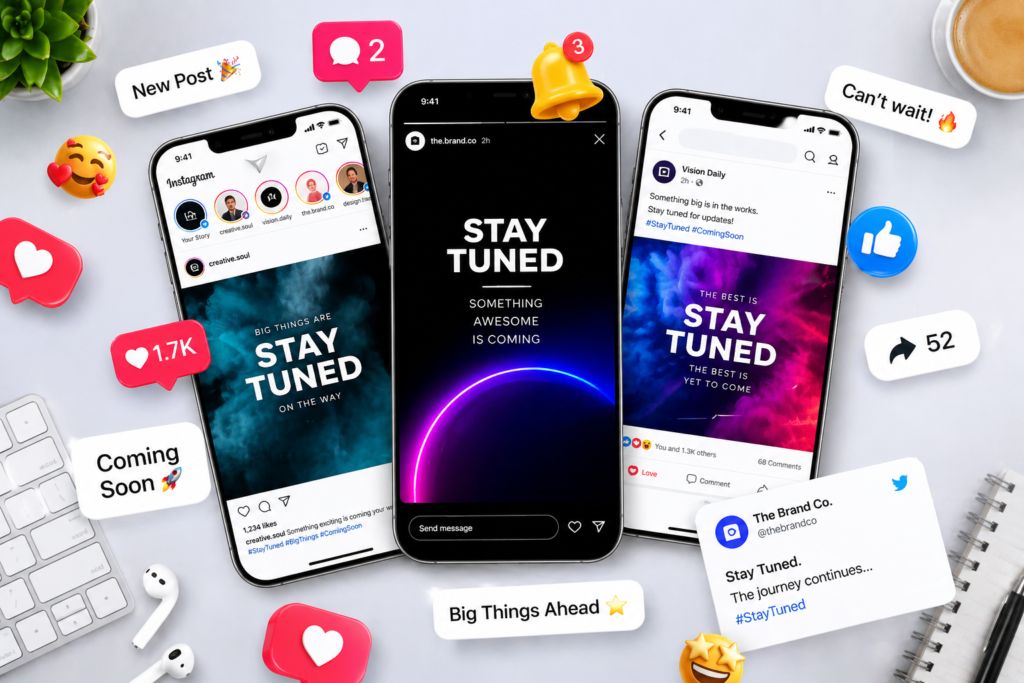
1. Social Media Teasers
You’ll often see creators post something like:
“Big announcement coming soon… stay tuned 👀”
It builds curiosity. It’s basically a soft cliffhanger.
2. YouTube Videos
At the end of the videos:
“We’ve got something exciting coming next week. Stay tuned!”
It’s a way of keeping viewers hooked for future content.
3. TV Shows and News Channels
Classic use:
“Stay tuned after the break.”
This is the old-school version of modern attention-grabbing.
4. Marketing Emails
Brands love it:
“We’re launching something new. Stay tuned for updates.”
It’s basically marketing suspense.
My First Real Experience With the Phrase
I still remember the first time I really noticed this phrase instead of just reading past it.
It was during a product launch video years ago. The presenter said:
“We can’t reveal everything yet… stay tuned.”
And honestly, I waited.
Not because I had to, but because the phrase created curiosity without even trying.
That’s when it hit me, this isn’t just filler language. It’s a psychological hook.
Why People Use “Stay Tuned” So Much
There’s a reason this phrase is everywhere. It works.
Let’s break it down in simple terms:
1. It Builds Curiosity
People naturally want closure. If you tell them something is coming later, they’re more likely to stick around.
2. It Creates Engagement
Instead of ending a message, it keeps the conversation open.
3. It Feels Friendly and Casual
It doesn’t sound strict or formal. It feels like:
“Hey, we’ll continue this soon.”
4. It Works Across Platforms
Whether it’s Instagram, YouTube, or email marketing, the phrase fits everywhere.
Different Ways “Stay Tuned” Is Used Today
One interesting thing I’ve noticed is how flexible this phrase has become.
Let’s look at a few variations:
✔ “Stay tuned for more.”
Slightly more formal, often used in articles or videos.
✔ “Stay tuned 👀”
More social media-style ads, curiosity, and emotion.
✔ “Stay tuned next week.”
Gives a clear timeline.
✔ “Stay tuned for updates.”
Common in news or tech announcements.
Even though the wording changes slightly, the meaning stays the same.
Is “Stay Tuned” Overused? Honestly… Yes and No
Let’s be real for a second.
Yes, it is overused.
But it still works.
That’s the funny part. Even if we’ve seen it a thousand times, our brains still respond to it.
It’s like comfort food for attention.
You know what it means instantly, so you don’t need to think. And in a fast-scrolling world, that matters.
When You Should Use “Stay Tuned” (and When You Shouldn’t)
If you’re a blogger, content creator, or even running a website, this phrase can be useful — but only if you use it properly.
👍 Good times to use it:
- You’re teasing upcoming content
- You have a series or follow-up coming
- You want to build curiosity
- You’re announcing something soon, but not fully ready
👎 Times to avoid it:
- When nothing is actually coming
- When your audience expects clarity
- When overused in every post
Because if everything is “stay tuned,” then nothing feels special anymore.
A Simple Breakdown of the Meaning in Everyday Language
If we strip it down completely, here’s what it really means:
- “Something more is coming.”
- “Don’t leave yet.”
- “Check back soon.”
- “You’ll want to see the next part.”
That’s it.
No mystery, no complexity. Just a friendly pause button in communication.
Why It Works So Well Online
Let’s talk psychology for a moment, but keep it simple.
The phrase works because it creates what’s called an open loop.
Your brain doesn’t like unfinished stories. So when you hear “stay tuned,” your mind quietly thinks:
“Okay… what happens next?”
And that small curiosity is enough to bring people back.
That’s why marketers love it. That’s why creators keep using it. And that’s why it’s not going anywhere anytime soon.
How I Personally Use “Stay Tuned” in Blogging
When I’m working on content, I sometimes use it at the end of a post when I know there’s more coming in the same topic.
For example:
“I’ll be covering the next part of this guide soon. Stay tuned.”
But I’ve also learned something important: timing matters.
If you use it too often, it starts to lose its charm.
So I treat it like seasoning. Not the main dish.
Common Mistakes People Make With “Stay Tuned”
Here are a few things I’ve seen (and honestly, sometimes done myself):
1. Using it with no follow-up
If nothing comes after, it feels empty.
2. Overusing it in every post
It loses impact quickly.
3. Using it in serious communication
It doesn’t always fit formal or urgent updates.
Fun Fact: It’s Older Than You Think
The phrase actually comes from early radio broadcasting.
Back then, listeners had to literally “tune” their radios to stay connected to a channel. If they changed frequency, they’d miss parts of the broadcast.
So “stay tuned” was literally a technical instruction at first.
Now it’s just… evolved into internet language.
Modern-Day Alternatives to “Stay Tuned”
If you want to sound a bit fresh or avoid repetition, here are some alternatives:
- “More coming soon.”
- “Keep an eye out.”
- “Don’t miss the next update.”
- “More details soon.”
- “We’ll update you shortly.”
Each one carries a slightly different tone, but the idea stays the same.
Conclusion: A Small Phrase That Still Does Big Work
“Stay tuned” might look like just another casual phrase, but it actually plays a big role in how we communicate online.
It builds curiosity. It creates a connection. And it keeps people engaged just a little longer in a world where attention disappears in seconds.
I like to think of it as a soft promise — not loud, not dramatic, just a simple way of saying:
“There’s more coming, and it’s worth waiting for.”
And honestly, that’s why it still works so well today.
So the next time you see “stay tuned,” you’ll probably notice it differently. Not just as filler text, but as a small invitation to stick around a little longer.
FAQs About Stay Tuned Meaning
1. What does stay tuned mean in simple words?
It means to keep paying attention because more information or updates are coming soon.
2. Is stay tuned formal or informal?
It’s mostly informal and is commonly used in social media, videos, and casual communication.
3. Can I use stay tuned in writing?
Yes, especially in blogs, announcements, or content teasers. Just avoid overusing it.
4. What is another word for stay tuned?
You can use phrases like “more updates coming soon” or “keep watching for updates.”
5. Why do people say stay tuned at the end of videos?
It helps keep viewers interested in future content and builds anticipation for what’s coming next.
